


Download The App
The CGE Golf App helps ensure you never miss a tee-off time or hotel check-in, giving you a seamless and smooth golf experience so you stay focused on your game!



Thailand's golf boom in 2026 is not a marketing narrative — it is a measurable, data-backed reality with direct implications for anyone planning a trip this year.
The Tourism Authority of Thailand estimates approximately 700,000 golf tourists visit the country annually, a figure that has grown consistently since the post-pandemic travel recovery accelerated. Thailand welcomed over 35 million international tourists in 2024 — a 35% year-on-year increase — generating 1.8 trillion Baht in tourism revenue. The global golf tourism market, valued at USD 27 billion in 2025, is projected to reach USD 60 billion by 2033, with Asia Pacific forecast to grow at a compound annual rate of 12.1% — the fastest-growing golf tourism region in the world.
Thailand sits at the centre of that growth curve. Courses are busier, peak-season tee times are booking out earlier than ever, and international awareness of Thailand as a first-tier golf destination has reached a level that would have been difficult to predict even five years ago.
This article breaks down the six factors driving Thailand's golf boom in 2026 — with specific data rather than broad assertions — and explains what the surge in demand means practically for golfers planning a trip this year.
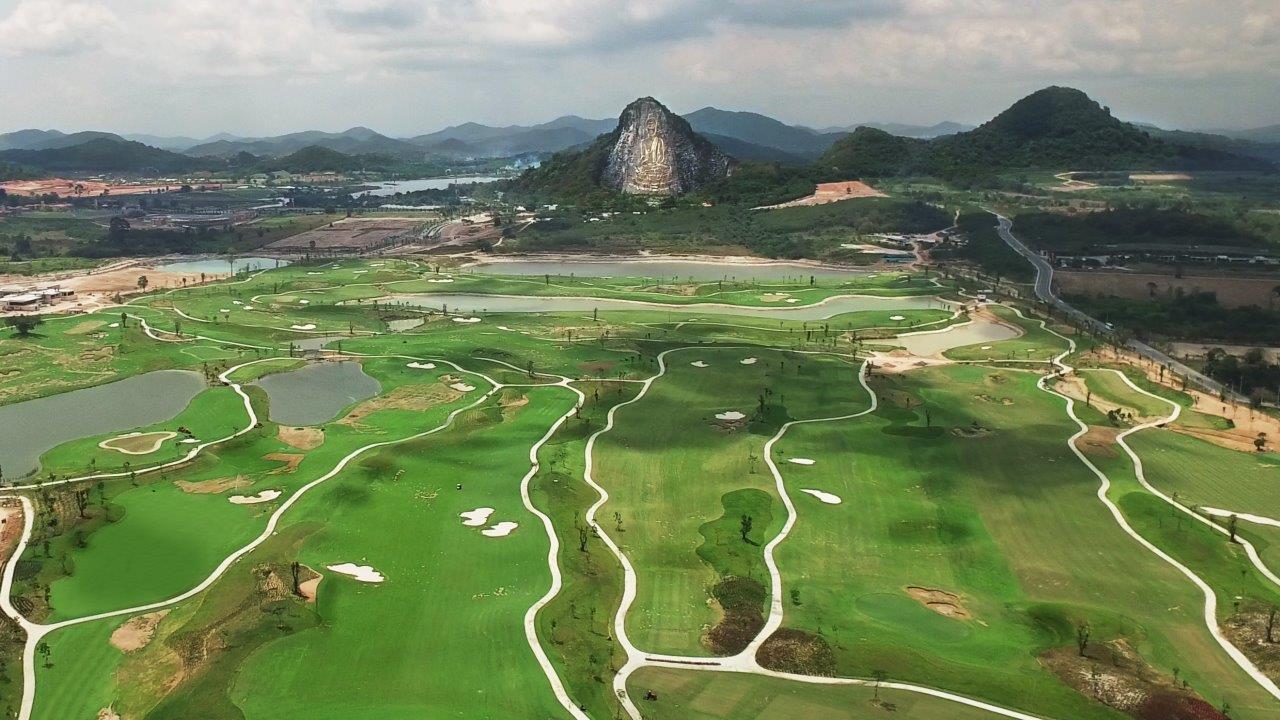 Chee Chan Golf Resort in Pattaya, Thailand - @CGE Golf
To assist international travelers, corporate golf event planners, and tour operators with high-level planning, we’ve broken down the essential numbers shaping Thailand’s golf landscape right now.
▪️ Total Course Inventory: 250+ active courses across 6 major regional tourism hubs.
▪️ Championship Designers: Jack Nicklaus, Greg Norman, Schmidt-Curley, Pete Dye, and Robert Trent Jones Jr.
▪️ Primary Regional Hubs: Bangkok, Pattaya, Hua Hin, Phuket, Chiang Mai, and Khao Yai.
▪️ Key Inbound Markets: Australia, South Korea, Japan, India, United Kingdom, and Continental Europe.
▪️ Primary Travel Motivators: Top-tier golf setups and manicured tracks, mandatory caddie systems, elite resort values, and direct transit corridors.
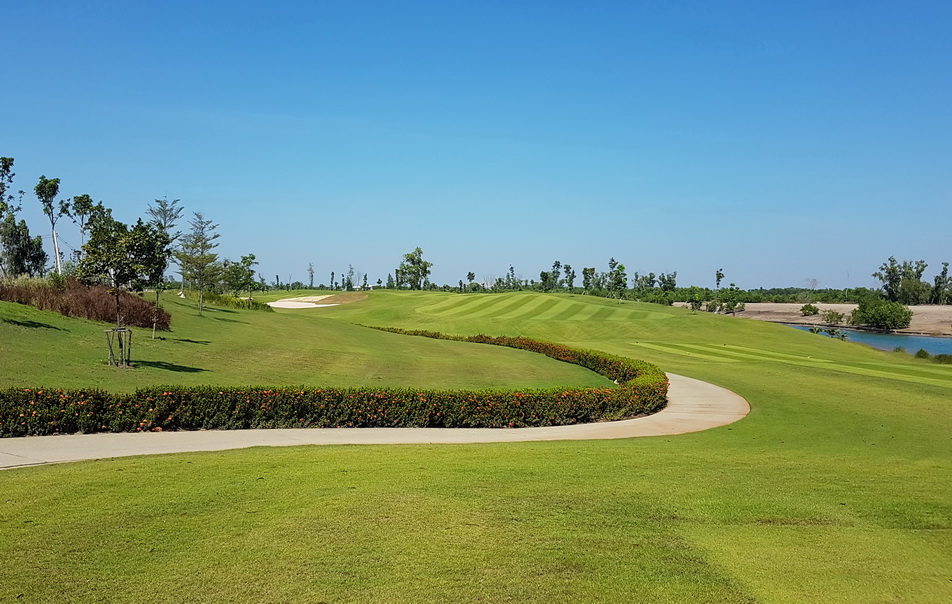 Royal Bang Pa-In Golf Club in Ayutthaya, Thailand - @CGE Golf
Thailand's golfing network has always been strong. What has shifted in 2025–2026 is the scale and quality of recent investment across the country's leading venues.
Across Bangkok, Pattaya, Hua Hin, Chiang Mai, and Phuket, Thailand offers more than 250 18-hole courses — many designed by internationally recognised architects including Jack Nicklaus, Greg Norman, and Schmidt Curley. Countries such as Thailand are investing heavily in golf course development and tourism amenities to attract international visitors, with courses offering unique golfing experiences across diverse landscapes.
The investment cycle visible in 2025–2026 includes new greens complexes, significantly improved drainage systems capable of handling wet-season play, upgraded practice facilities, and modernised clubhouse experiences that bring Thailand's top venues into genuine parity with the world's finest resort golf destinations.
Established venues — Siam Country Club, Black Mountain, Red Mountain, Blue Canyon — continue to hold their benchmark status. What is new in 2026 is the emergence of a second tier of genuinely excellent courses in less-visited regions. Khao Yai's Kirimaya Golf Course (Schmidt Curley design) and newer Phang Nga venues like Aquella Golf & Country Club are drawing golfers beyond the traditional Phuket-Hua Hin-Pattaya circuit, expanding the total footprint of high-quality Thai golf meaningfully.
👉 What this means for your 2026 trip: More genuine options at the top end of quality. The "must-play" list is longer and more geographically diverse than it was three years ago — which is both an opportunity and a reason to plan your itinerary with someone who knows the new additions.
Professional golf's presence in Thailand has grown significantly and now represents one of the country's most powerful marketing tools — exposing courses to global television audiences and consistently inspiring visiting golfers to experience the same venues.
The Honda LPGA Thailand, established in 2006 and held at Siam Country Club's Old Course in Pattaya, carries a prize fund of USD 1.8 million and is one of the LPGA Tour's flagship events in Asia. It remains the highest-profile women's professional event in Southeast Asia and consistently attracts the world's best female players.
The 2026 All Thailand Golf Tour — the 28th season of the domestic professional tour — runs from February through November, with 11 events across multiple regions including Khon Kaen, Chiang Mai, and Rayong. This domestic calendar, running in parallel with international events, creates a year-round professional golf presence that keeps Thailand's courses in the spotlight for the global golf audience.
The professional calendar also creates a practical planning consideration: several of Thailand's top courses close to outside play during tournament weeks and preparation periods. For peak-season visitors, knowing which courses are affected on which dates — and planning around them — is essential. CGE Golf monitors the full Thai professional calendar as a standard element of package planning.
👉 What this means for your 2026 trip: Thailand's professional golf visibility is driving awareness globally, which translates directly into higher demand and earlier tee time sellouts at the courses seen on television. The Honda LPGA Thailand at Siam Country Club Old Course in February is the most significant example — plan around it or accept limited access.
The surge in international golf visitor numbers in Thailand is not evenly distributed. Understanding which markets are driving growth explains a great deal about when and where demand pressure is most intense.
▪️ Australia represents one of Thailand's highest-growth inbound golf markets in 2025–2026. The combination of direct flight access to Phuket and Bangkok, shared time zones with minimal jet lag, a strong Australian golf culture, and Thailand's value proposition relative to Australian domestic golf costs (green fees in Thailand average 60–70% less than comparable quality courses in Melbourne or Sydney) has produced a significant and growing annual migration of Australian golf groups.
▪️ Korea and Japan continue to generate consistent high-volume inbound golf travel, driven by the quality gap between Thai courses (larger, more varied, significantly cheaper per round) and domestic golf in both countries, where weekday green fees at comparable quality venues frequently exceed USD 200.
▪️ India has emerged as a fast-growing source market, boosted by increased direct air connectivity and a rapidly expanding domestic golf participation base seeking international experiences.
▪️ Europe — particularly the UK, Germany, and Scandinavia — contributes a meaningful premium segment, with European golf travellers typically booking longer stays (10–14 days) and playing more rounds per trip than most other markets.
The Thai Government is targeting 40 million international arrivals in 2025, supported by expanded flight capacities and international promotion campaigns — multi-billion-dollar transit face-lifts that directly benefit golf visitors through more route options and shorter connection times.
👉 What this means for your 2026 trip: Peak-season demand (November to April) is under more pressure than at any point in the last decade. Australian and Korean groups — typically booking 4–8 months in advance — are filling morning tee times at priority courses earlier than independent travellers typically realise. Booking through a specialist with pre-allocated tee time blocks is no longer just a convenience; it is increasingly the only reliable way to secure preferred courses at preferred times during high season.
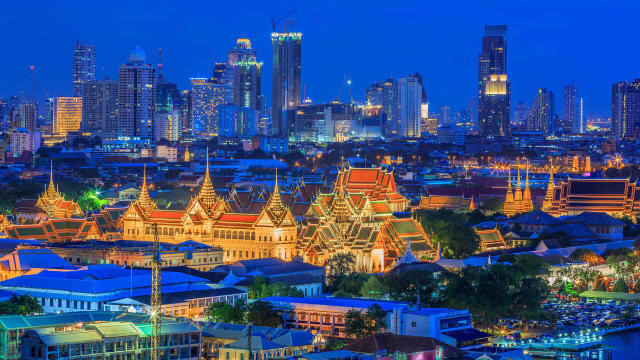 Grand Palace in Bangkok, Thailand at night - @CGE Golf
One of the most frequently cited reasons for Thailand's golf boom is pricing — and it remains a legitimate differentiator, not just a marketing claim.
Comparable quality golf in Japan typically costs USD 180–300 per round at equivalent standard venues. Korea runs USD 100–200 at premium courses. Australia's top resort courses range from AUD 150–300. In Thailand, a round at a championship venue — including a professional caddie — typically costs USD 60–120. The value gap is substantial and has not closed meaningfully despite rising demand.
Beyond green fees, the overall cost structure of a Thailand golf holiday continues to offer genuine value. Four-star resort accommodation in Phuket or Hua Hin runs USD 80–150 per night at properties that would cost USD 250–400 in equivalent destinations. Post-round dining, spa access, and activities similarly reflect the Thai hospitality value proposition — premium experience, accessible pricing.
This combination — world-class courses, professional caddies, luxury accommodation, and remarkable food — at a total trip cost significantly below competing destinations is the foundational reason Thailand's golf tourism numbers keep growing. The value proposition has not been eroded by the boom; Thailand remains one of the world's best-value premium golf destinations by a meaningful margin.
One of the quieter but most meaningful drivers of Thailand's golf boom is the quality of the world-renowned hospitality and travel setup connecting its five main golf regions.
Domestic aviation in Thailand is frequent, affordable, and reliable. Phuket, Chiang Mai, Bangkok, Pattaya (via U-Tapao), and Koh Samui are all served by multiple daily flights from Bangkok, with direct Chiang Mai–Phuket routes also available. A Bangkok-to-Phuket flight takes approximately 90 minutes and costs USD 40–80 on low-cost carriers — making a five-destination golf circuit a completely hassle-free getaway.
Modern expressways between Bangkok and nearby golf destinations (Pattaya: 2 hours, Hua Hin: 2.5 hours) have improved significantly through motorway upgrades. Private transfers between these destinations are readily available, comfortable, and reasonably priced.
For golfers, this seamless connectivity opens up incredible multi-destination itineraries—like pairing Bangkok with Pattaya and Phuket, or Chiang Mai with Hua Hin—the kind of trip that would require way too much heavy lifting off the course. Because Thailand is so compact and the domestic travel is so efficient, it’s practically built for the ultimate "golf circuit" holiday where you spend your energy on the course, not on the road.
👉 What this means for your 2026 trip: A twelve-day, five-region Thailand golf circuit is more practical now than at any previous point. The main planning complexity is not transport — its sequencing courses, accommodation, and tee times correctly across multiple destinations. This is exactly what a specialist like CGE Golf manages as a core service.
Thailand's golf boom is not driven by golf alone. The country's off-course ecosystem — its culture, food, beaches, and hospitality culture — is a genuine competitive advantage that distinguishes it from all rival golf destinations.
No comparable golf destination offers night markets, Michelin-starred street food, island-hopping, traditional Thai massage culture, ancient temples, and luxury beach resorts within the same short travel radius as championship golf. Partners and non-golfers have as much to do in Phuket, Bangkok, or Chiang Mai as the golfers on the course — which is a significant factor in the group and corporate travel segment, where unanimous buy-in from all participants is required to get a trip approved and booked.
The caddie culture deserves specific mention as an off-course differentiator. Thai caddies — trained professionals assigned to every player as standard — provide a service experience that fundamentally changes the character of a round. The combination of genuine course knowledge, personal service, and the warmth of Thai hospitality creates an on-course experience that returning visitors consistently cite as the single most memorable element of their trip.
Around 34% of golf travellers globally now combine their trips with other activities like cultural exploration, spa experiences, or adventure activities — a trend Thailand is uniquely positioned to benefit from given the density of world-class non-golf experiences available within each golf destination.
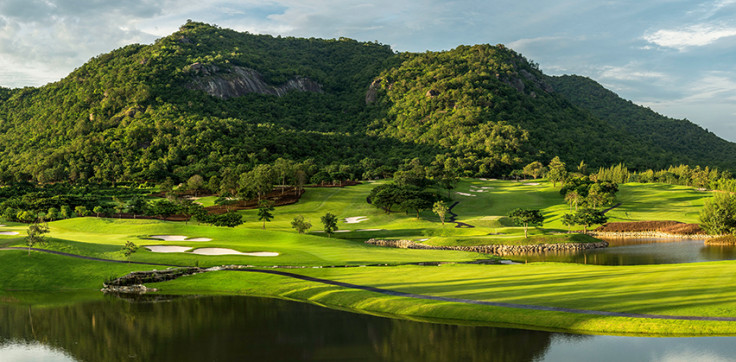 Black Mountain Golf Club in Hua Hin, Thailand - @CGE Golf
Understanding why Thailand golf is growing is useful. Understanding what it means for planning your trip is essential.
▪️ Book earlier than you think necessary. Peak-season morning tee times at Red Mountain, Blue Canyon, and Black Mountain are being secured 6–10 weeks in advance — earlier than three years ago. If your travel window falls between December and February, start the booking process 3 months out at minimum.
▪️ Expect green fees to trend gradually higher. Rising international demand applies upward pressure on green fees at top venues. 2025–2026 has seen modest increases at several Phuket and Hua Hin premium courses. Thailand remains an exceptional value — but the price gap with competitor destinations is slowly narrowing. Booking a managed package at contracted rates locks in current pricing.
▪️ Group bookings require more lead time than individuals. Peak-season coordination of morning tee times for groups of 6+ at priority venues now requires booking 8–12 weeks ahead in some cases. CGE Golf's pre-allocated tee blocks at key courses across Phuket, Hua Hin, and Pattaya specifically address this constraint.
▪️ Consider emerging destinations before the crowd does. Khao Yai's Kirimaya course, Aquella in Phang Nga, and several newer Chiang Mai venues are genuinely excellent and significantly less congested than established Phuket favourites. Golfers who build these into their 2026 itinerary will enjoy the quality without the peak-season pressure.
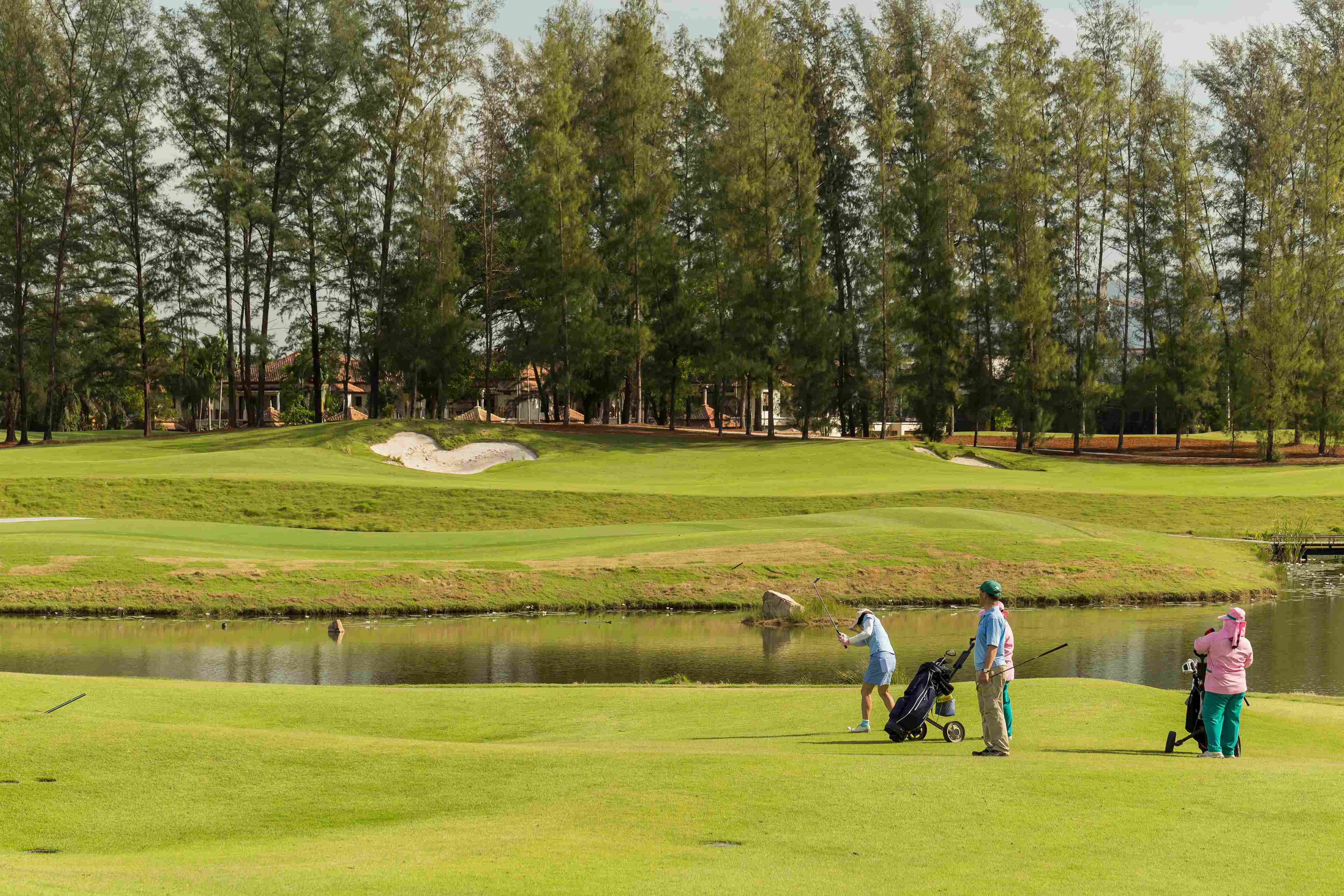 Laguna Golf Phuket, Choeng Thale, Thailand - @CGE Golf
Thailand's golf boom means the window for casual, last-minute planning is smaller than it used to be. The golfers who have the best experiences in 2026 are the ones who book morning tee times at the right courses from the right partner — before the peak-season tee sheets close to independent access.
CGE Golf specialises exclusively in Thailand and Southeast Asian golf travel. Their team plays and reviews every course on this list, holds pre-allocated tee time blocks at all major venues for peak season, and builds personalised itineraries that match your preferred courses, travel dates, and budget — covering your transfers, green fees, and caddies in one seamless, all-inclusive package. .
▪️ Get a Free 2026 Thailand Golf Package Quote → Tell us your travel dates, preferred destinations, and number of rounds — receive a complete itinerary and cost breakdown within 24 hours.
▪️ See Our Must-Play Thailand Golf Course Guide for 2026 → In-depth reviews of the top 8 courses across Phuket, Hua Hin, Pattaya, Bangkok, Koh Samui, and Chiang Mai.
▪️ Speak with a Thailand Golf Specialist → Our ultimate 12-day, 5-destination itinerary lays it all out—from tee sheets and transfers to the best courses and post-round spots in full detail.
The CGE Golf App helps ensure you never miss a tee-off time or hotel check-in, giving you a seamless and smooth golf experience so you stay focused on your game!